Story
SCORING SURVIVOR
After four months of intensive work, I’m thrilled to announce the release of the Survivor soundtrack, now available on all major streaming platforms.
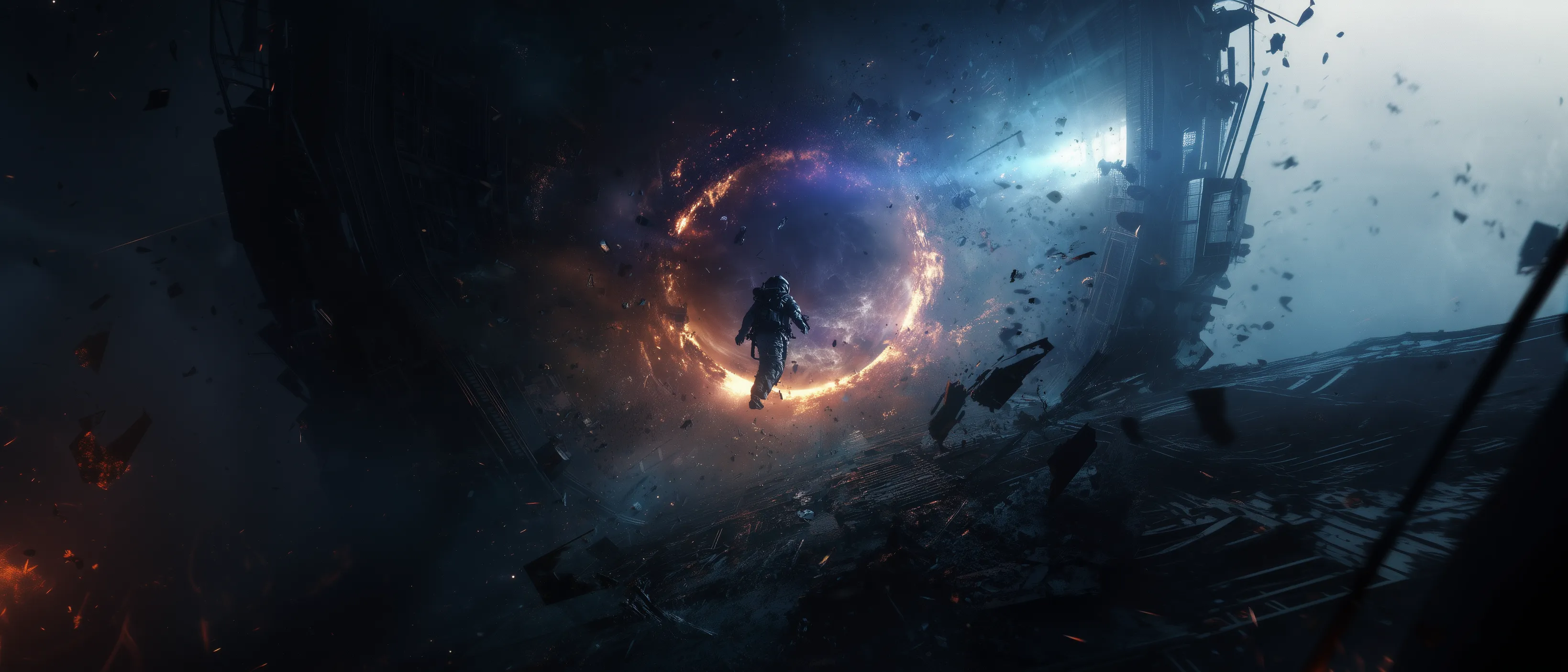
Survivor presented one of the most challenging scoring opportunities of my musical journey. The vision was ambitious, at least by my standards: composing the soundtrack to a deeply personal science fiction film (that doesn’t exist) following a lone astronaut on an impossible mission. The music needed to carry the narrative weight on its own.
For the past decade, I’ve primarily composed short, standalone orchestral pieces. This “film” demanded something fundamentally different: thematic development across a 30-minute narrative, with motifs that evolve, recur, and interconnect. I’m immensely grateful to have worked with award winning composer Zack Heyde as a coach during this process. My biggest breakthrough came when he helped me understand the critical importance of thematic anchors in long-form storytelling. The audience needed musical ideas to hold onto, especially in a film this sonically explorative.
THE THEMATIC FOUNDATION
I built the score around a number of motif’s, but the two primary ones that weave throughout the entire soundtrack are:
The Tragedy Theme: Three notes - A#, A, D. This haunting phrase embodies the catastrophic loss that drives our protagonist forward. Its simplicity allows it to appear in various contexts throughout the score, sometimes barely recognizable but always emotionally resonant.
The Protagonist Theme: Two chords - C minor (C/Eb/G) transitioning to Ab major (C/Eb/Ab/C). This progression takes on multiple emotional contexts throughout the film: melancholic, hopeful, determined, heroic. The same musical DNA, transformed by instrumentation and narrative context.

AWAKE
The soundtrack opens with a calm scene quickly followed by chaos. We don’t understand what we’re seeing - just flashes of catastrophe, overlapping sounds of destruction. I combined sound design elements with music to create an immediate and visceral understanding that something terrible has occurred. The audience needed to feel the weight of this trauma before understanding it intellectually. I’m grateful to the incredibly talented Jonas Bock, whose sound design work here was absolutely crucial in establishing that immediate sense of devastation.
This violent opening transitions abruptly to silence as our protagonist awakens aboard his ship. He’s alone, approaching a massive anomaly in space. The camera holds on his face as memory returns - he knows who he is and what happened, but the question hangs unspoken: why is he here?
The Protagonist Theme emerges for the first time, quiet and uncertain, performed by strings with electronic textures underneath. The emotional goal here was isolation and melancholy, but with an underlying sense of purpose. Something drives him forward, even as confusion clouds his mind.

ANOMALY
The ship drifts slowly toward the anomaly - a swirling portal within a vast nebula. The visual effects team created something truly stunning here, and I knew the music needed to match that sense of ancient mystery and terrible beauty.
As the ship approaches, the camera cuts between the protagonist’s face and the growing anomaly outside his viewport. The tone is dark and ominous, but there’s something crucial happening beneath the surface: he’s struggling. Not with the ship’s controls - those are functioning fine - but with his own mind. We see flashes across his face. Pain. Grief. Determination.
I built the cue around interweaving tonal and percussive arpeggios that suggest both the mathematical precision of the ship’s trajectory and the inexorable pull of the anomaly itself. Deep strings - cellos and basses - combine with low brass (trombones, bass trombones, and tubas) to create a dark, ominous foundation. Over this, I layered a texture of strings and electronic pads that swell and recede like breathing. The external journey forward mirrors his internal struggle to overcome trauma.
As the ship finally reaches the portal’s edge, all hell breaks loose - sensory chaos - alarms blaring, reality itself beginning to distort and convulse around the ship. I represented this musically by employing tremolo effects across a recording of the ending of this track played back in reverse to illustrate time distorting, warping. Sound design alarms layer with the orchestral and electronic elements, building to what feels like an inevitable massive climax.
But then - abruptly, before the climax resolves where you’d expect it to - silence.
He’s through.

THE OTHER SIDE
The other side of the portal is in complete darkness. Complete silence.
The protagonist sees nothing. Hears nothing. The camera holds on his face in the dark, barely visible. We can just make out his eyes moving, searching for any reference point. Where am I? What happened?
His senses adjust slowly, like when lights in a room are suddenly switched off and your eyes need time to adapt. I mirrored this with music that emerges almost imperceptibly from the silence - the quietest possible sounds gradually becoming audible. Soft, sustained tones. Barely-there textures.
A faint clock ticking slowly becomes recognizable. At first it ticks normally, providing the only sense of temporal orientation in this void. But then something goes wrong. The ticking distorts rhythmically - stretching and clipping. It’s all over the place. Something is fundamentally broken here.
As more comes into focus, confusion sets in. The camera shows us what he’s seeing: this space doesn’t make sense. Geometry that shouldn’t exist. Light sources that have no origin. His breathing quickens.
Then panic. His hands grip the controls. The music builds in dissonance and tension, still quiet but increasingly unstable. He tries to take action - any action - a knee-jerk response to regain some sense of control.
And then he hits a wall of realization: he’s on the other side of the portal. This is real. This is happening. And he is absolutely terrified.
A voice echoes through space - or perhaps only in his mind. “Who are you?”

FRAGMENTS
Things are more grounded now. The camera pulls back from him to reveal he’s still on his ship - barely. The vessel survived the portal crossing, but just barely. Panels flicker. Systems strain. A soft ship alarm pulses in and out, and the hallways pulse with red light in sync with each warning tone.
I matched the music to this pulsing alarm, creating a rhythmic bed that breathes with the ship’s struggling systems and the visual rhythm of those red flashes. Over this, indecipherable echoes and whispers drift through the soundscape - fragments of voices from his past, never quite clear enough to understand, but recognizable enough to unsettle.
At least he now knows where he is. His senses return. Memory fragments slot back into place. He’s on his ship, he has a mission, and a lot rests on his shoulders. The camera stays on his face as we watch him process this, gathering himself.
The Protagonist Theme emerges here, but transformed from its earlier iteration in “Awake.” Where it was uncertain and melancholic before, now it carries a thread of hope. Not triumphant hope - tentative hope. The kind that says I can do this. I have to do this. Actor [Name] brings such subtle determination to this moment, and I wanted the music to support that fragile resolve.
But in the face of that hope, there’s struggle. The protagonist moves through the ship, checking systems, trying to orient himself. The camera follows him, and gradually the whispers from earlier grow louder, more insistent.
The Protagonist Theme becomes darker. As he pushes forward through those red-lit hallways, more and more memories of the tragedy’s horrors come back at him. The music intensifies. Electronic arpeggios increase in urgency and aggression, their patterns becoming more chaotic. Dramatic French horns carry the melody - the Protagonist Theme trying desperately to remain hopeful, to push through - but the weight is too much. Actor [Name]’s performance here is visceral; we watch his resolve crumble in real time. The horns swell with determination, but ultimately the darkness overwhelms him. The music crashes down as he collapses under the full weight of what he’s lost.

THE FALL
What began as fragments becomes visceral as the protagonist’s emotional walls finally crack. This is the film’s emotional nadir - the moment where the full horror of what he witnessed and lost settles into him.
I wanted this scene to breathe. Just the protagonist, alone in his ship, collapsing under the weight of grief. I used orchestral strings almost exclusively here, because sometimes grief demands that raw, human quality. The theme stretches out, dwelling in the sadness without rushing forward.

YOU ARE NOT LEAVING THIS PLACE
In this sequence, the protagonist makes a desperate plea - internal or external, we’re not entirely sure. I want this to stop. Let me out.
The realm itself responds.
This was the sequence I struggled with a lot during composition. How do you musically represent a place that is conscious, that can hear and respond? I rewrote the cue multiple times before a breakthrough which came from the video game Senua’s Saga: Hellblade. It brilliantly portrayed voices that are simultaneously internal and external, threatening and ritualistic.
The space around the ship seems to pulse with dark energy, geometric patterns forming and dissolving. I matched this with throat singing, Nordic and Viking-esque coarse spoken words, tribal percussion heavily layered with electronic percussive elements, and Viking war horns. Aleatoric solo string instruments add to the unsettling atmosphere with twisted, strained sounds - scraping, bending, writhing. The sequence builds with ritualistic intensity, as if the place itself is performing a dark ceremony.
By the end of the sequence, the protagonist stops fighting. He accepts. There is no escape. He must complete what he came here to do.

BACK ONLINE
Something clicks. The camera pushes in slowly on the protagonist’s face as we see the shift happen. Grief and confusion give way to operational focus. Training fully takes over where emotion left off. His hands move across controls with precision. He’s no longer just surviving - he’s executing.
This was the first sequence where I opened things up. After six tracks of dark, tragic music, the sound needed to reflect the shift in the protagonist’s mind. Multiple electronic arps interlock with spiccato violins and violas, creating sharp, precise rhythms. Brass doubles with synth saws for clean, focused chords that push forward with determination. Driving percussion anchors it all while a soaring piano cuts through - hopeful, action-oriented. He’s locked in.

OVERLOADING
A catastrophic system failure forces immediate action. Red lights flash across the cabin. Alarms scream. The protagonist moves with deliberate precision under extreme pressure, his hands flying across emergency protocols.
This sequence called for something different than hectic chaos. I wanted controlled intensity - almost like a thriller. I thought of the TV show Silo as a reference point: that sense of mounting pressure contained within precise, deliberate action.
The first half of the cue is restrained: long sustained notes hover over a subdued but driving beat. The tension is coiled, controlled. The camera work matches this - measured cuts between his face and his hands as he methodically works through the crisis.
But as the situation escalates and becomes more hectic, the music transforms. Fast string ostinatos begin to build, layering on top of each other. Taikos gradually increase in intensity, their thunderous hits punctuating each critical decision point. Status displays show failures escalating toward catastrophe.
Finally - success. The systems stabilize. But rather than release into relief, the cue explodes into a defiant, intense rendition of the Protagonist Theme. Purpose begins to crystallize in that moment - this is just the beginning.

I REMEMBER
In a quiet moment that follows, a complete memory surfaces. Not fragmented this time. Whole.
The scene shows us what the protagonist is remembering. We’re transported into his past, seeing the memory as he experiences it. The memory comes on slowly at first, images emerging hazily, then taking shape - painfully, tragically.
Just before the core of the memory crystallizes, everything fades to silence. Only the string orchestra remains, just as in “The Fall.” This sonic stripping away felt essential - grief this deep demands that raw, human quality that only strings can provide. The camera holds on the protagonist’s face in the present as the memory overtakes him.
The memory transitions to sadness. Piano chords play echo first, some resolving into different chords that the echoes themselves. They are supported by a solo violin - a disorienting, mournful sound that mirrors the backward pull of memory itself.
But then, through the darkness, a happy memory breaks through. The protagonist smiles while crying.
A sweet waltz emerges - full orchestra, lush and tender. I deliberately kept electronic elements out of this waltz, wanting it to feel timeless and untethered from the harsh present. Except for one crucial detail: a single synth patch subtly weaves through the waltz at the end, playing the Tragedy Theme. It adds a hint of ominousness, a shadow of foreboding. We’re watching something beautiful while knowing what’s coming.
As the waltz ends, the darkness returns. The memory shifts to the tragedy itself, but now at a deeply personal level. We see how it affected him, how it destroyed him. The orchestral elements fade away, giving way to dark synth textures that swell with devastating weight. The truth becomes undeniable: he has lost his loved one to this catastrophe. Now we understand - this mission isn’t abstract. It’s rooted in a promise to someone who is gone.

WITHIN WITHOUT
The memory shifts from sorrow to something sharper - a quiet ignition. He carries those fragments now, not as weight but as momentum, a tether to the part of himself that still reaches.
He is deep within the anomaly. Reality bends, gravity folds, light distorts, and fragments of memory drift through the void like ghosts. But what once felt unknowable now feels alive, almost responsive. For the first time, he’s not recoiling from it. He’s moving toward it.
He heads to the bridge, sits in the pilot seat, and sets the course to the center of the anomaly. Outside, the world swirls in impossible geometry: colors inverted, shadows glowing, motion defying logic. The ship trembles, but he doesn’t. Every movement he makes carries intention. He’s not escaping anymore. He’s advancing.
The score here is propulsion - driving rhythm that refuses to stop. The orchestra and electronics fuse completely, each feeding the other’s energy. I wanted the cue to feel like willpower given form - determination made audible.
Earlier, I’d planned for the score’s two worlds to remain separate: orchestral for memory, electronic for the present. But inside this moment, that line vanished. The past and present are one now - grief and purpose indistinguishable. The sound evolved exactly as the character did.
He’s inside the storm that once consumed him. And instead of being lost in it, he’s steering straight through it.

IT WAS ALWAYS GOING TO BE YOU
At the center of the anomaly, everything is still. The storm around him has folded inward, forming an eerie calm - the eye of the storm. It’s quiet, weightless, almost beautiful. He’s no longer fighting himself. He’s simply being.
He rises from the pilot’s seat and makes his way toward the airlock. The camera follows him through wide, deliberate shots - long, unbroken takes of him moving through the empty corridors. He passes vacant crew stations, unoccupied seats, reminders that this ship was meant for more people. But he’s alone now. Entirely.
As he dons his spacesuit, fragments of memory surface - flashes of faces, laughter, shared moments from a world long gone. His people. The ones he lost. The ones he’s doing this for. The music turns bittersweet, interlacing the tragedy with warm harmonies that feel almost like sunlight breaking through the void. It’s tender, nostalgic, but filled with resolve.
He knows this is a one-way mission. He’s heading into the heart of the unknown, and he accepts it. This act - his final act - isn’t about survival anymore. It’s about sacrifice, about keeping his promise, about giving meaning to everything that came before.
The score mirrors that duality - gentle orchestral swells brushed with sorrow, but underscored by quiet strength.
He pauses at the airlock door. Outside, the swirling light of the anomaly pulses slowly, beckoning. He looks out for a long moment, and as he exhales, faint reflections of smiling faces ripple across his visor - memories made manifest.
It was always going to be him.

ENDGAME
If any sequence nearly broke me as a composer, it was this one. I rewrote the music for this climactic sequence many times, unable to get it right, both compositionally and instrumentally. This was everything the film had been building toward - the most dangerous stage of the mission, where tension spikes, control must be seized, and there’s no turning back.
The challenge was nailing down not just the tone, but how that tone needed to shift through multiple emotional gears. After several complete rewrites, I finally found the right approach.
The cue opens with rhythmic percussive patterns reminiscent of a psychological thriller. He needs to get this right. Focus. A clock starts ticking like a countdown.
And then the anomaly sees him. It’s going to fight back.
An electronic and orchestral hybrid heroic swell erupts - brass fanfares layered over surging synthesizer arpeggios - but then it dies down, as if the anomaly is drawing breath before the real confrontation begins.
And then: ACTION!
Hectic electronic arpeggios surge forward over simple orchestral sustains. Heroic brass declarations - horns and trombones propel the protagonist’s desperate struggle forward while strings play hectic ostinatos beneath.
But then, suddenly, everything slows down.
He’s losing his footing. The brass and electronics vanish. Only strings remain, contemplating his struggle and perhaps his surrender. For a brief moment, I wondered if this quieter passage would read as weakness, but then decided it was essential. This is the moment where he could give up.
And then he rises.
This is it. There is no going back. This is getting done in the face of the anomaly’s intense opposition.

The music erupts with determined swells. I threw every orchestral instrument at this section along with synth arps and pads and a choir. The cue builds through multiple orchestral and electronic swells, each one more intense than the last, until finally reaching a massive climax as he completes the final step.
And then time suddenly reverses. Violently.
Chaos erupts all around. What is happening?
I took the opening track, “Awake,” and played it in reverse at 4x speed. In its original form, “Awake” built up tension through ascending Shepard tones, creating the sensation of rising tension. In reverse, it created the opposite effect - tension slowly dying down, winding backward. But there was something else in that sound, something I hadn’t anticipated: it felt like his life force draining away, spiraling in the wrong direction.
I layered in sound design elements I’d used throughout the film - the anomaly’s energy signatures, radio interference, time distortion effects - throwing everything at the sonic chaos. The reversed Shepard tones descend endlessly as the chaos winds down, reality settling back into place.
Then, a mental stillness. We hear the exact same sounds from the very beginning of the soundtrack. And then a single NASA-esque radio tone cuts through, interrupting all sounds, echoing alone into the dark.
He’s done it. His people saved, time rewound - it’s complete. But the look on his face tells us everything: it came at the cost of himself.

LETTING GO
The final sequence is quiet and brief. His mission is complete and he is at peace with his fate.
I wanted to keep this cue simple, triumphant, calm, and intimate. I used a smaller string section rather than the full string section - this moment needed to feel personal, not grandiose. There’s triumph in what he’s accomplished, but also serenity in letting go.
As he closes his eyes and passes into the fade, the music continues for a few more seconds. The screen fades to black, and the music fades to silence.
One detail I’m particularly fond of: the last three notes of this track - the final notes of the entire album - are the same three notes that open the first track of the soundtrack. The journey ends where it began, coming full circle.
FINAL THOUGHTS
Survivor pushed me far beyond my comfort zone as a composer, demanding long-form thematic thinking and narrative cohesion across 30 minutes of continuous score. Working on this it has taught me invaluable lessons about motif development and trusting the story to guide sonic choices.
The soundtrack is now available on all major streaming platforms. I’m curious to hear how audiences experience the marriage of image and music in theaters, and how the music functions for those who listen to the album on its own.